Interreligious Dialogue
Interreligious dialogue is a necessary condition for peace in the world, and so it is a duty for Christians as well as other religious communities. … In this way we learn to accept others and their different ways of living, thinking and speaking. We can then join one another in taking up the duty of serving justice and peace, which should become a basic principle of all our exchanges. (Evangelii Gaudium #250)
Interfaith Dialogue is a central part of our missionary charism. Our founder, St. Guido Maria Conforti, was someone for whom dialogue was an essential part of ministry. St, Conforti made many pastoral visits to the different parts of his diocese and visited his missionaries in China. He did not approach these visits as a tourist or observer, but as someone seeking to know the reality of the place and the people, open to hearing their stories and their reality. In responding to these voices, he showed, in his writings, an openness to the call of the Spirit.
Nostra Aetate (published in 1965), one of the key documents of The Second Vatican Council has shaped the mission of the Church and its approach to Dialogue. Since Vatican II we have seen the papacies of Pope Paul VI, Pope John Paul II, Pope Benedict XVI, Pope Francis and now Pope Leo XIV reflect, develop and guide the Church in interfaith dialogue. There is a realisation that mutual understanding, respect and collaboration can only happen if we engage in interfaith dialogue. Nostra Aetate #1 reminds us that the Catholic Church’s tasks is to foster closer bonds of love among people and nations.
As Xaverians, we must take new ways of living our charism to proclaim the Good News. Interfaith dialogue is one of the ways for us to live our charism. By doing it we must be able to contribute to building peace in the world, to better understand different realities, and relate with others in the complexity of the modern world.
We are still learning what interfaith dialogue means and how to enter into dialogue: however, we realise that our identity as Christian is core to our voice. As Xaverians, it means becoming witnesses of Christ wherever we find ourselves and interfaith dialogue helps deepen our knowledge and nourish our faith in the Lord.
Here in the UK we are fortunate to be part of national Church structures and local informal gatherings. In Scotland we are part of the Bishops’ Committee for Interreligious Dialogue. In England we are present in the Diocese of Salford, supporting the on-going dialogue there. Across that wider Xaverian world, dialogue is an essential part of our missionary presence. As a congregation we are fortunate to have Fr Paulin Batairwa Kubuya, sx as undersecretary for the Dicastery for Interreligious Dialogue.
The term “common ground” is often used when talking about interfaith dialogue. However, we need to realise that dialogue is not just with people of other faiths but also with people who have no faith, with the cultures that are present in our world today and in various other areas of human life. Dialogue opens us to the a wider understanding of our place in God’s Kingdom and helping us transcend our limited vision by creating spaces where The Spirit can breathe and inspire. In Vatican II “The Other” refers to non-Catholic Christians, other religions and the secular world. The Council's documents, while affirming Catholic identity and doctrine, challenges us to engage with these groups: and one of those new ways is dialogue.
Symposium Report
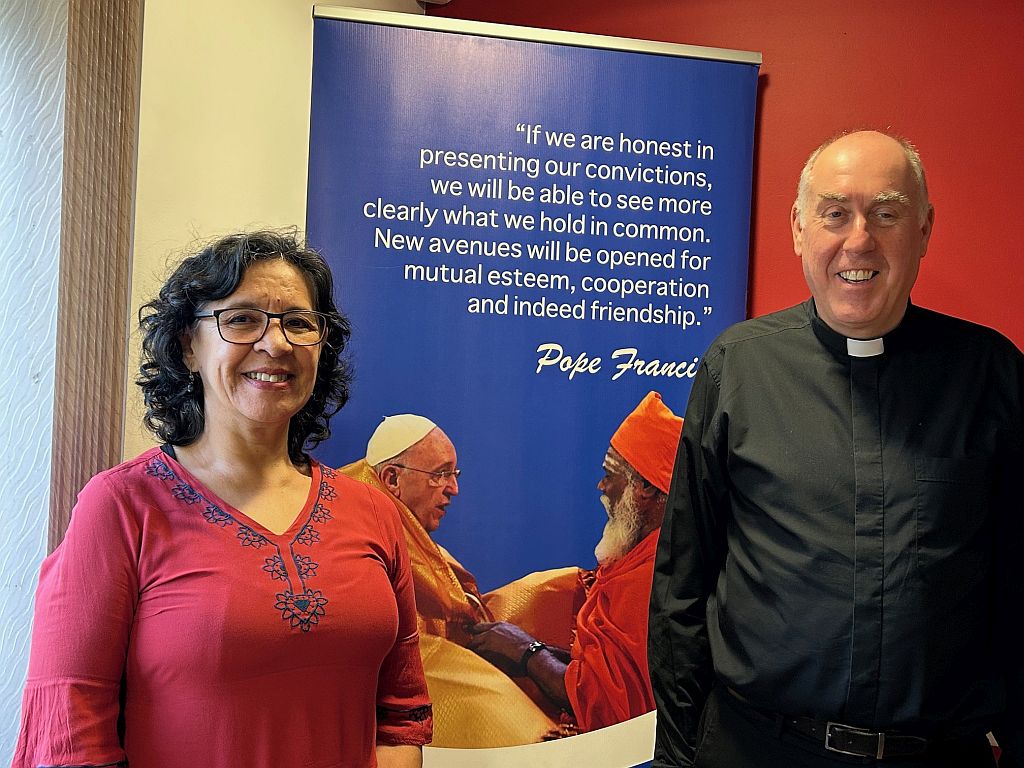
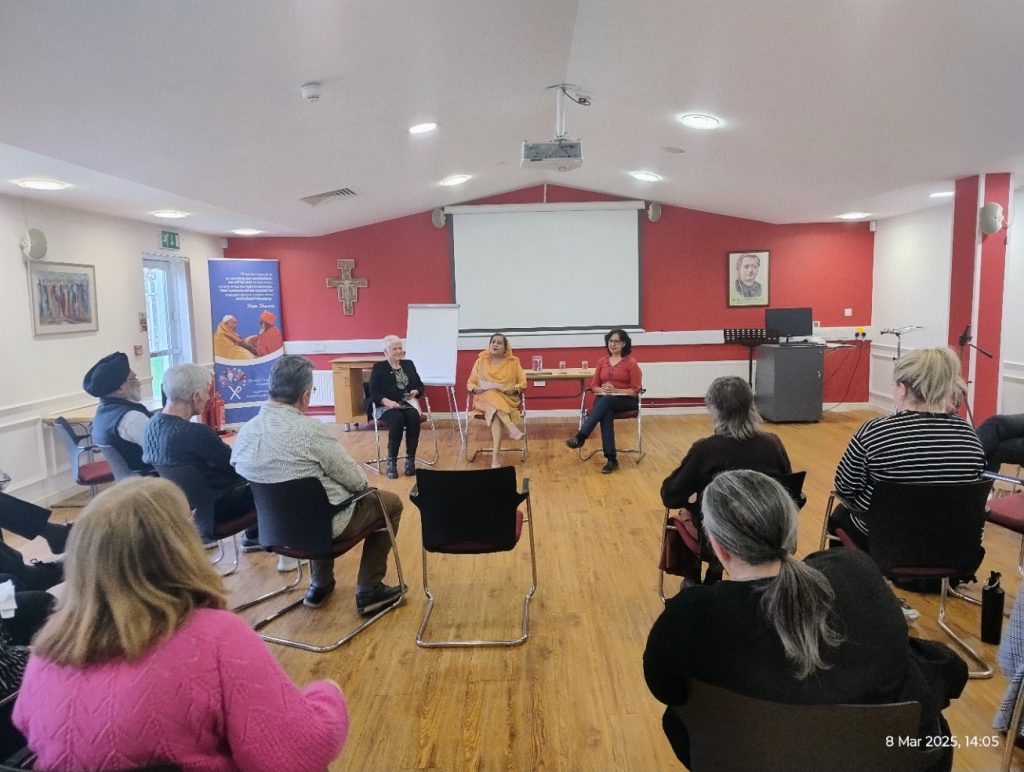
On Friday March 7th and Saturday March 8th, 2025, the Xaverian Community were delighted to co-design, host, and facilitate the annual Scottish Bishops Symposium on Interreligious dialogue. The event took place at the Conforti Centre in Coatbridge. This year’s theme was “The role and importance of Interreligious Dialogue in Catholic Peacebuilding locally, nationally and globally.” We were fortunate to have as a keynote speaker Martha Inés Romero from Colombia, the Secretary General of Pax Christi International. Bishop Brian McGee was present in his role as President of the Interfaith Commission.
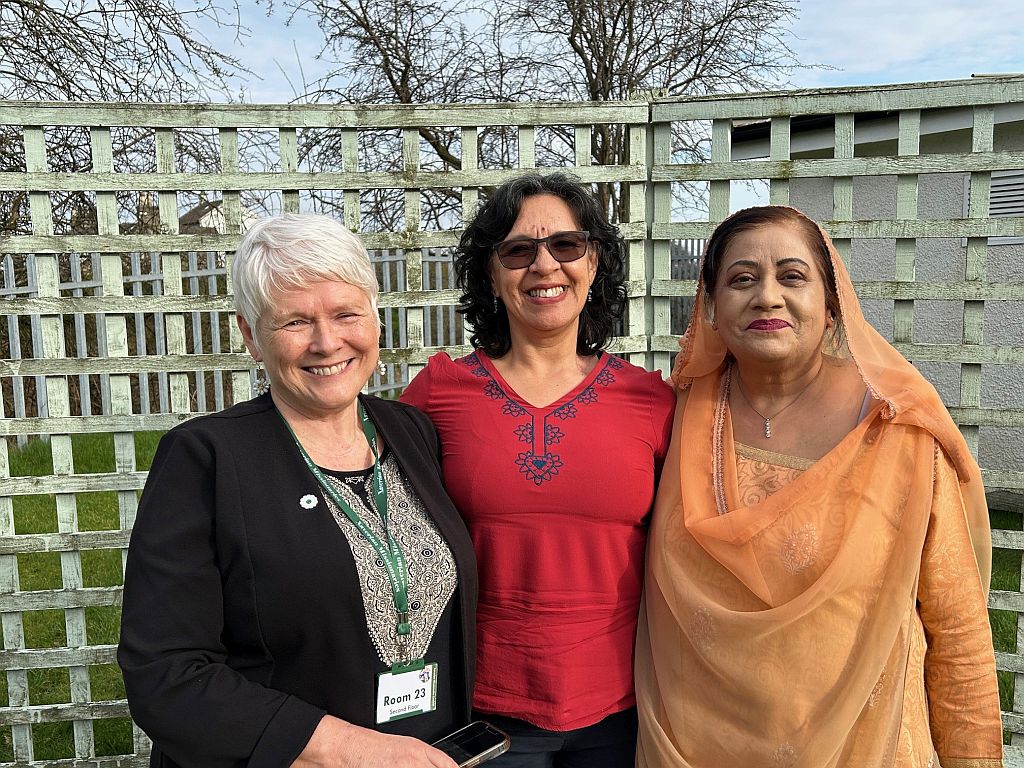
The event also included dialogue on peace with sisters in the Sikh, Muslim and Baha’I faith traditions. The event took place during International Women’s’ Day and included a panel conversation with women representative from the main faith traditions.
This is an extension of our ongoing membership and support of the Bishops’ Committee on Interreligious Dialogue. From the event, a strong declaration emerged that identified that now as ever there is the need to grow and sustain positive dialogical relationships among faith communities. Relationships with a focus on nurturing the common good, the building of mutual trust, and the celebration of difference and diversity.